
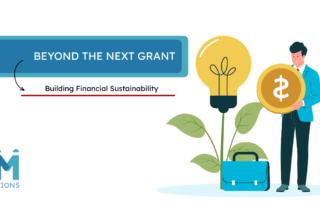
Beyond the Next Grant: Building Financial Sustainability
For many NPO leaders, sustainability immediately means one thing: funding.
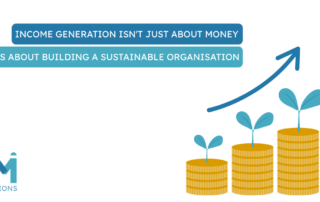
And funding matters. But financial sustainability is much more than finding the next grant.
The real question is: How resilient is our income model?
Imagine that 70% of your income comes from one donor. Your organisation may look financially healthy, but it is highly vulnerable. If that donor changes priorities, your entire organisation could be affected.
Diversification is therefore important.
Depending on your mission, your income mix might include trusts and foundations, corporates, individual donors, monthly giving, government contracts, international donors, memberships, training, consultancy or earned income. The answer will be different for every NPO.
The goal isn’t to chase every possible funding opportunity. It is to develop income streams that fit your mission and reduce unnecessary vulnerability.
Taking Care of Business provides an interesting South African example. Its work combines enterprise development, social impact and a circular economy approach, creating a model that includes significant self-generated income.
But financial sustainability also requires good financial management. Know your monthly operating costs. Understand restricted and unrestricted income. Monitor cash flow. Know how dependent you are on your largest donor.
And build reserves. A reserve isn’t wasted money. It is breathing space when funding is delayed or unexpected costs arise.
Try this
Calculate: What percentage of our annual income comes from our largest funder?
If the answer makes you uncomfortable, you’ve found an important sustainability priority.