

About Bruce Wade

This author has not yet filled in any details.
So far Bruce Wade has created 224 blog entries.

EVERYTHING YOU NEED FOR A SUCCESSFUL TAX DAY

The moment that we have all been waiting for is a few weeks away. And yes SARS has announced the opening of the Tax season on the 1st of July and it will run until the 31st of October. Three weeks shorter than what we were all used to.

Taxpayers have to complete and submit tax returns before closing date to avoid unnecessary penalties from SARS. Submitting tax returns gives SARS the opportunity to assess an individual’s income earned, deductible expenses and tax paid over to SARS for the tax period and calculate to see if there is money refundable to the taxpayer or payable to SARS by the taxpayer. It can go either way, after completing the return the taxpayer can request a tax calculation that will show them who owes who money. In some cases, the employee who might have deducted more money in terms of PAYE hence SARS will refund the taxpayer and vice versa.

Now what does this mean for the taxpayer? It simply means the taxpayer has to start preparing to complete and submit tax returns. IRP5’s need to be in place, medical certificates, receipts for medical expenses and all other relevant documents that one needs in order to complete a tax return. If the tax return is going to be done by the taxpayer’s Accountant then all the relevant information needs to get to the Accountant in time. The sooner the tax return is completed and submitted the sooner any refunds can be paid to the taxpayer – time value of money. In the event the tax return is being completed by and Accountant, the taxpayer needs to be available respond to any questions or queries that the Accountant might have regarding the tax return.

By |2018-06-07T10:59:43+02:00June 7th, 2018|Financial Management|0 Comments

Financial Management – Two eyes are better than one

During this last week, we were asked to put together a report for a client, comparing the actual expenditure to date against the agreed budget. We pulled the actual information from the accounting package and sent the report to the client. After he looked at it he sent us a number of questions, checking where certain payments, which he was expecting to see, were allocated and clarifying some of the amounts. It made me realise that everyone has a picture in their heads of how they expect their financial reports to look, based on the payments you have made and remember.

Most bookkeepers use logic and a certain amount of guesswork to allocated payments and income to account categories. However, there are times where our logic and the client’s expectation don’t match up. That is why it is so important to check where the transactions are allocated within your financial reports. You want the reports to portray the picture you intended, so you need to control where entries end up. All accounting packages have some kind of transaction listing that shows what transactions make up the total for a category on the financial report. It is your responsibility to check that everything is in the correct place.

Bookkeepers are a bit like artificial intelligence, they learn as they engage. So effective communication regarding where transactions should be allocated will improve the accuracy of the allocations in the future. However, many people only look at the details once a year, if that, so there is no opportunity for growth and learning, and an improved accuracy. Incorrect allocations can have an effect on your profitability and your tax, so don’t brush them off as inconsequential, rather take the time to get it right the first time.

If you’d like someone to walk you through your financial reports and transaction list, and help you to know what to look for, give us a call and set up an appointment.


By |2018-06-05T10:29:55+02:00June 5th, 2018|Financial Management|0 Comments

When not to file a tax return

It’s one of the most asked questions when it comes to taxes: Do I really need to file a tax return? Most people would turn to the SARS website to find out what the authority has to say about filing a tax return.

On the website, SARS states that you do not need to file a tax return if ALL of the following applies to you:

  • Your total employment income/salary for the year income/salaryFebruary 2018) before tax (gross income) was not more than R350 000
  • You only received employment income / salary for the full year of assessment (March 2017 to February 2018) from one employer
  • You have no other form of income (e.g. car allowance, business income, taxable interest or rental income or income from another job)
  • You do not want to claim for any additional allowable tax related deductions (e.g. medical expenses, retirement annuity contributions, travel expenses, etc.).

Most times we assume that if our income is below the tax threshold or we earn employment income, we do not need to file a tax return. The first part, because SARS says so and the later; because the employer files this on our behalf.

But what happens when the employer doesn’t file the PAYE returns on our behalf and we realise 6 years down the line that this has not been done? Or we need to purchase a house and the bank requires a Tax Clearance Certificate (A document from SARS that shows that our tax affairs are in order)? SARS will not issue a Tax Clearance Certificate if we have not filed the returns for all those years that the returns are outstanding. Last year, SARS penalised tax payers who had not filed their returns regardless of the reasons why they had not filed these; even if their income was below the tax threshold. This is because there is no way SARS can tell that a taxpayer’s income is below the threshold unless a return has been filed.

So the question begs: When should I file a tax return? The answer; if you are wanting to avoid the headaches of having to file old returns when the information has far been lost; is always. If you are employed, this will help you to confirm that your employer or previous employer has filed your payroll return; as the information will self-populate on e-filing if this has been done. If not, it gives you an opportunity to follow up with the employer before they shut shop, or you lose contact with them for varying reasons.

Even though SARS states that you may not file a return in certain circumstances; they still stipulate that you should keep the documents concerning income earned for 5 years or until an audit has been concluded. They categorically state that a person who is not required to submit a return, but has during a tax period received income must keep records for five years if they are subject to tax but did not file due to an exemption or a threshold. Therefore it is always prudent to be on the safe side and keep all returns filed and up-to-date.

By |2018-05-24T12:46:07+02:00May 24th, 2018|Financial Management|0 Comments

Government ironing out details for rollout of R2bn SMME and Innovation fund

Due to the complaints by the citizens about banks and financial institution’s refusal to support the SMME’s proposals as they consider them as risky ventures irrespective of the brilliance.
The National Treasury and the Department of Science and Technology have formulated an SMME and Innovation Fund which will be impĺemented during the 3rd quarter, with the disbursements in 2019/2020.
The funds will build on best practices in the sector and will be directed towards innovative and potential start-ups. The fund will lead to the rollout of the EUEP through SMMEs Support Programme for SA(SSPSA). This project will inject R800million into the SMMEs over the next 5years.
The Fund will be announced in September 2018 and will deploy effectively to craft an alternative future for entrepreneurs and SMMEs in SA.

See link

https://www.bee.co.za/single-post/2018/05/20/Government-ironing-out-details-for-rollout-of-R2bn-SMME-and-Innovation-fund

By |2018-05-23T13:11:53+02:00May 23rd, 2018|Uncategorized|0 Comments

Google Duplex: the future is here

Google has released their new Artificial Intelligence platform dubbed Google Duplex. The key aspect of this application is to relieve us humans of mundane tasks that can easily be done by a smart computer giving us more time to do the important stuff like running our businesses.

I the video below you can see, or hear an example of Duplex phoning an actual hair Salon to make an appointment for Lisa. The interactions and understanding of the human conversation are astounding. All the research and data gathered by Google from years of ‘failed’ projects that we have seen come and go online have all added valuable input into this now clever system.

The future is here. I am keen to see where we go from this as we begin to interface AI speech robots with wearable devices and mobile phones. Scary or not: the future has arrived.

By |2018-05-22T13:21:11+02:00May 22nd, 2018|Entrepreneurship, Innovation|0 Comments

Financial Management – The SARS piece of the pie

Income tax is the bane of our business and personal existence, but as upright citizens, we have to pay it. And the time of payment creeps up on us unexpectedly at least twice a year. Provisional tax is paid in Aug and Feb of every year. But those payments are not the actual tax expense that is reflected in our accounting records. Only at the end of the financial year, once all the accounting activities have completed and we have a set of annual financial statements, can we say exactly what profit (or loss) has been made, and therefore exactly what tax is due. Thus, your annual income tax return is a reflection of the final picture for the year.

Against this final financial picture is laid the provisional tax that you have paid during the year to see if you have over/underpaid. Typically the provisional tax is shown as an expense in the financial year until the final accounting entries to calculate the total tax for the year. Then the over/underpayment of tax is added/subtracted to make the tax expense account tie-up with the tax return. Any overpayment (where you paid too much provisional tax) is then shown on the balance sheet as a receivable, but if you owe SARS a bit extra in tax, this will reflect as payable in the accounting records.

It sounds like you only have to think about income tax a few times a year, but if you don’t plan for it, you can end up without enough money to pay it. We suggest putting an estimated amount aside in a separate account every month, to make sure you have enough money to pay SARS. To know what to estimate, you need a good and accurate idea of your monthly profit.

To help you stay on top of your estimated tax bill, give us a ring.

By |2018-05-22T11:00:44+02:00May 22nd, 2018|Financial Management|0 Comments

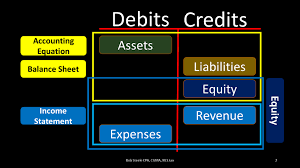
Is accounting only a matter of debits and credits

Often times some businesses do not value the importance of bookkeeping and accounting. Statements like bookkeepers do not bring the money so I can do without one are often heard. What most business owners fail to understand is even though bookkeepers and accountants do not bring in the money, they provide very vital support to any business.

Bookkeepers and accountants are trained to keep accurate records of transactions happening in any organisation. This information once captured into the entity’s accounting package is then used to draw up management report that is given to management and business owners so they can see at a glance how the business is performing. In short so they can see how their efforts are paying.

Bookkeepers and accountants do not just debit and credit accounts simply because for every debit entry there has to be a credit entry and vice versa, no. They have to follow certain acceptable financial reporting standards when they do the capturing and processing of financial information in the accounting package. This requires a lot of knowledge and ongoing continued professional development as changes in standards are brought in every now and again.

This is then used by different users of financial statements which vary from prospective Investors, banks if the entity wants to borrow money, shareholders etc.

We may not agree but accounting is the heart of a business. Without proper record keeping, how is a company going to know what their liabilities are and who owes them? Some transactions might just fall through the cracks. Remember we have among us some companies that will only pay upon presentation of an invoice and if the entity does not know who still owes and how much some money might never be received.

By |2018-05-17T14:36:50+02:00May 17th, 2018|Financial Management|0 Comments

Financial Management – The price of borrowing

In the profit and loss statement, there is a category of costs we haven’t yet discussed. These are the financing costs. They are a separate section of costs as they are not generated by the operations of the business, or the production of your product or service. The financing costs related to how you fund the ‘vehicle’ that is the business and are usually made up of interest paid to the provider of the funds. Interest is normally paid on the following types of funding:

  • overdraft on business accounts
  • short-term loans from the bank or other lending agencies
  • higher purchase agreements for vehicles, equipment and other assets
  • loans from members, directors or shareholders and their families

Finance costs do not increase in relation to sales or business growth, but rather are linked to the size of the funding received, the repayment period and the national interest rate. Financing of some kind is often necessary at some point in a business’s life; overdraft being the most common. When the cost of that additional inflow of cash is separated out and highlighted in the financial statements, how much is actually costs can be a surprise.

Deciding to access funding, in whatever form, should be a careful consideration, as the monthly commitment to repayments can be a challenge, and the cost can be crippling. The need for a continual inflow from an outside source means that the business is not generating enough cash to sustain itself and that something in the business operations needs to change. Rather than increasing costs through additional financing, a business owner should always look at ways to increase access to the cash available within the business first.

Should you wish for some outside insight into maximising available cash within your business, please make an appointment with one of our consultants.

By |2018-05-15T10:41:50+02:00May 15th, 2018|Financial Management|0 Comments

File Returns or else….

Having received SARS’ current press release declaring non-submission of tax returns a crime, I realised it is quite possible to live an innocent life without stealing from anyone but find oneself at the wrong end of the law. SARS declares that the courts would declare one guilty by omission if they fail to file their tax returns. Unlike Spain, the United States and other nations; South Africa has never had any high-profile cases of non-compliance with local tax laws.

When we think of tax crimes globally, high profile names in sports and the entertainment world come to mind. Like Wesley Snipes, who failed to submit tax returns from 1999 to 2001. This resulted in the fiscus being deprived of US$7m in taxes, resulting in a three-year jail sentence. Other high profile individuals who were convicted for failure to file tax returns are Jeffrey Atkins (famously known as Ja Rule), Joseph Cartagena (Fat Joe), Dolce & Gabanna (exonerated in 2013) e.t.c resulting in huge fines and prison sentences.

In SARS recent press release they explicitly declare the criminality of failing to submit tax returns and that they have engaged the National Prosecuting Authority in order to facilitate the prosecution of would-be offenders. This could be an individual who fails to submit their returns may end in prison or being fined; resulting in a criminal record. This would affect several professionals whose occupations require that they should not have criminal records. SARS also fired warning shots at prominent South Africans who have not filed their tax returns. It is clear that they are not too far from the reach of the long arm of the law.

These far-reaching measures were necessitated by an increase in non-submission of tax returns. At the end of March 2018, SARS’ Outstanding Returns Book showed that 30 million returns were outstanding from active taxpayers. SARS did emphasize that criminal prosecution will be applied as a last resort; after all other measures to ensure compliance have been exhausted. All the individuals who will appear in court have been engaged beforehand and had been issued with final demands. A good example of the conviction of Mr S. Ragunat in Port Shepstone. As a representative of SPS Distributors, he paid an R5,600 fine for the non-submission of 50 tax returns for VAT, PAYE and Corporate Tax. He has since complied.

Going forward, it is prudent to ensure all tax returns are filed on time and to work towards filing any outstanding returns to avoid prosecution. It appears SARS phone calls on outstanding returns and final demand notices can no longer be taken lightly. The grey-area has always been for those below the income tax thresholds and companies registered for PAYE but currently, do not have employees. For the former, it is advisable that you file tax returns regardless of your income to avoid SARS penalties as what happened last year. It will be difficult 3 or 4 years later to prove to SARS that you were below the tax threshold as the documents may no longer be accessible. If the company is registered for PAYE and currently has no employees, it is advisable to continue filing nil returns until the position changes for the company. As for those who chose to bury their heads in the sand and complicit taxpayers, well the whip has been cracked and you may find oneself behind bars.

By |2018-05-10T15:05:41+02:00May 10th, 2018|Legal|0 Comments

Financial management – how much is enough?

In the last blog, we looked at the operating costs of the business. We understood that these are the fixed costs of running the business that needs to be covered every month by the sales. In your budget, you’ll have put the sales revenue needed to make a profit, as your monthly or annual target. However, do you know how many products or days of service you need to sell to make that target? That number, the number of units sold to pay the operating costs, is called the Breakeven Point. How many sales are required for your income to equal your costs?

For this calculation, you’ll need one of the numbers previously discussed in this series – the gross profit per item. Since the cost price of your product is paid out of the sales income, only the profit on that item is available to contribute to covering the operating costs. To calculate the breakeven point you will need to divide your operating costs by the average gross profit. This will give you the number of products necessary to be sold in order to cover your costs.

What if you are a service business? Do you know how many staff you need to break even? Generally service business employs staff when the workload is too great for the current complement. However, it is important to calculate the optimal number of staff to cover costs and generate a profit.

First you have to calculate the gross profit on sales by deducting the average hourly cost for the employees from the average hourly charge out rate. It may be useful to do this per service type or employee group, if the rates differ vastly. Then you are able to divide the operating costs (net of the employee’s remuneration costs) by the average profit per hour to calculate the total number of chargeable hours to be worked to breakeven.

It can be helpful to then work that back into the number of full-time staff necessary to work those hours. To calculate the available chargeable hours, start with the calendar year, less weekends and public holidays, leave and staff development days, staff meeting time and general unproductive time. Typically it works out to less than 200 days of chargeable time per person. Divide the breakeven hours into days and divide by the number of available days for 1 person to calculate how many staff members you need. You might be surprised at how many staff members you require!

There are a lot of numbers in these calculations, and since we find numbers to be fun, give us a call if you need help with the numbers!

By |2018-05-08T10:00:57+02:00May 8th, 2018|Financial Management|0 Comments