
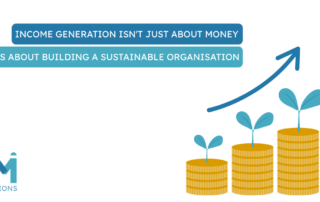
Income Generation Isn’t Just About Money, It’s About Building a Sustainable Organisation
For many South African NPOs, the fundraising calendar dictates the organisational calendar. Teams move from one funding application to the next, hoping the next grant will keep their programmes running and staff employed.
While grant funding remains essential, it shouldn’t be the only strategy keeping your organisation alive.
The most resilient organisations understand that sustainable income isn’t simply about securing more funding. It’s about creating long-term value through strong relationships, strategic partnerships and diversified income streams.
And that’s why EM Solutions has put together a 5-part blog series on relationships for income generation.
Let me reiterate: income generation is not about replacing fundraising, it’s about strengthening your organisation for the future.
Why income generation matters
Income generation gives organisations something that grants alone rarely provide -choice.
With multiple income streams, organisations can invest in innovation, retain experienced staff, respond to emerging community needs and build financial reserves that provide stability during uncertain times.
Rather than operating project-to-project, sustainable organisations can think strategically. They plan years ahead instead of funding cycles ahead.
What sustainable organisations look like
Sustainable organisations:
- Diversify their income sources.
- Understand the value they create.
- Invest in governance and leadership.
- Build relationships continuously.
- Measure impact effectively.
- Review their funding strategy regularly.
- See partnerships as long-term investments.
Unsustainable organisations often:
- Depend on one or two major funders.
- Chase every funding opportunity.
- Build relationships only when they need money.
- Operate in constant crisis mode.
- Lack long-term financial planning.
- Struggle when grants end.
The difference is rarely passion. It’s strategy.
A success story from our sector
Ladles of Love began as an emergency food relief initiative. As the organisation grew, it recognised that relying solely on donations would limit its impact. By developing long-term relationships with businesses, suppliers, volunteers and corporate partners, Ladles of Love created a network that supports both its programmes and its sustainability.
Its growth demonstrates that lasting impact is built through relationships, not transactions.
Looking ahead
Throughout this series we’ll explore why the organisations that thrive are those that build relationships before they need income.
Because sustainable organisations don’t simply receive funding.
They create value that others want to invest in.
——–
Checking in
Is your organisation relying too heavily on grant funding?
EM Solutions helps South African NPOs review their current funding mix, identify new income opportunities and develop practical sustainability strategies that align with their mission.
If you’re ready to move beyond survival and build a more resilient organisation, contact EM Solutions. Together we’re committed to Unlocking NPO Potential.