
Enhancing Accountability: Using Your Strategic Plan to Build Trust and Measure Progress

A grassroots NPO in KZN is currently struggling. The board is unsure if progress is being made and are demanding reports. The staff feel over-monitored and unable to focus on the actual work in the community. And the donors want impact stories and numbers, now, or they will cut funding.

Sound familiar? Accountability often feels uncomfortable — but it doesn’t have to be.

Why accountability matters in NPOs

In South Africa, NPOs carry deep responsibility: to communities, to funders, to staff and volunteers and to the public.

Let’s set the record straight. Accountability is about faithful stewardship, not control.

How a strategic plan helps

Your strategic plan is vital:  it creates shared clarity and answers these questions:

  • What are we trying to achieve?
  • How will we know if we are succeeding?
  • Who is responsible for what?

When expectations are clear, accountability becomes fair.

Knowing who is accountable

  • The Board: Focuses on strategic oversight, not daily operations, using the plan to guide decisions.
  • Leadership: Translates strategy into annual goals and reports progress honestly.
  • Staff and Volunteers: Understand how their work contributes, and feel valued rather than

Transparency builds trust

Here are some practical ways that you can use your plan for greater accountability:

  • Set annual goals linked to strategy
  • Review progress quarterly
  • Use simple indicators, not complicated reports
  • Celebrate progress, and name challenges openly

Healthy accountability strengthens internal culture, improves donor relationships and keeps the organisation aligned with its mission.

A strategic plan is not about perfection.

It’s about learning, adjusting, and staying faithful to your purpose.

EM Solutions’ coaches and mentors can assist you to unlock your NPOs potential for 2026 by helping you to review and consolidate your strategic plan. Give us a call today.

We hope this little series on strategic planning has given you lots of food for thought and some great practical tools.
By |2026-02-03T11:18:25+02:00February 3rd, 2026|Leadership, Strategy|0 Comments

Improving Resource Allocation: Using Your Strategic Plan to Focus What Really Matters

A real-life challenge

An NPO in the Mpumalanga has passionate staff and strong community trust. But every year, budgets feel tighter and burnout increases. Staff are busy — but not always effective. When asked why, the answer is honest: “We respond to whatever is urgent.”

Without a strategic plan guiding decisions, everything feels urgent.

The reality for South African NPOs

Most NPOs in our country operate with limited funding, small teams, high community need and lots of pressure from donors and partners.

This makes focus one of your most valuable resources.

How a strategic plan changes the conversation

A strategic plan helps leaders ask better questions:

Does this activity support our priorities?
Should we invest more here — or less?
Are we funding what matters most?

Instead of reacting, you choose.

Practical ways to allocate resources better

Here’s how to use your strategic plan:

1. Budget with intention: Budgets are built around strategic priorities, not history.

2. Align staff roles:  Each role should clearly contribute to one or more strategic goals.

3. Smarter fundraising:  Fundraising focuses on what the organisation has decided is important (and that does not include chasing every funding opportunity).

4. Say “no” with confidence:  A strategic plan gives you a respectful, professional reason to decline non-aligned opportunities.

Putting resource allocation into practice

If your strategy prioritises early childhood development, then:

Training, staffing, and funding flow there
New projects are assessed against that focus
Reporting becomes clearer and more honest

Tools that will help this focus include:

Annual plans linked to your strategic goals
Budget-to-strategy mapping
Simple quarterly check-ins

You don’t need fancy software; you need consistency.

When resources are aligned, teams feel less stretched, impact improves and donors gain confidence.

And it becomes much easier to talk about accountability.

Next week in Blog 3: How to use your strategic plan to strengthen accountability,from the board to volunteers.

Our team at EM Solutions is available to assist you with evaluating your strategic plan and ensuring you can focus on what really matters. We believe in you, and in unlocking NPO potential.

By |2026-01-26T13:13:59+02:00January 26th, 2026|Leadership, Strategy|0 Comments

Strategic Plans – and how to create one that actually helps your NPO

A familiar NPO story

A small community-based organisation in Khayelitsha started with huge heart: supporting vulnerable children after school. Over time, opportunities came knocking. Food parcels, holiday programmes, youth skills training and even a donor asking about starting an ECD centre.

Each opportunity was good. Each was needed. But soon the team was exhausted, funding was stretched, and no one could clearly answer the question: What is our main focus right now?

If you lead a NPO, a strategic plan is essential.

What a strategic plan really is

A strategic plan is a simple, shared roadmap that helps an NPO decide:

Why we exist
What we are focusing on over the next 3–5 years
What success will look like
What we will not focus on (just as important)

In the South African NPO context where funding is tight, staff often wear many hats, and needs are overwhelming, a strategic plan is not a luxury. It is a leadership tool. If you lead a NPO, a strategic plan is essential.

What a strategic plan is not

Let’s clear up a few myths:

It is not just a donor requirement

It is not a long, complicated document

It is not something only the board or a consultant owns

It is not meant to gather dust on a shelf

A good strategic plan should be used, not admired.

Core building blocks of a strong strategic plan

Most effective NPO strategic plans include these five things:

1. Vision – the change you want to see in the world
2. Mission – what your organisation actually does
3. Values – how you work
4. Strategic priorities – 3 to 5 clear focus areas
5. High-level outcomes – what success will look like

(Tip: Keep it simple. Complexity does not equal impact.)

A practical way to create your strategic plan

You don’t need a massive budget or months of workshops. Here’s a down-to-earth process that works well:

1. Get the right people in the room: Board members, leadership, and key staff (not everyone, but the right mix).
2. Be honest about your reality: What is working? What isn’t? What is draining your team?
3. Clarify your focus: Ask: If we could only do three things well over the next few years, what should they be?
4. Agree on priorities and outcomes: Use clear language that everyone understands.
5. Write it down simply: A 5–10 page document is more than enough.

Common mistakes to avoid

Trying to do everything
Using vague language like “empower” without clarity
Not reviewing the plan again once it’s approved

Why a good strategic plan matters this year

A solid strategic plan helps you move from reacting to leading. And once you have clarity, something powerful happens: you start using your resources better.

Next week in Blog 2: How a clear strategic plan helps your NPO allocate time, money, and energy more effectively.

As always, EM Solutions is available to assist you with putting together your strategic plan and helping facilitate your planning. We believe in you, and in unlocking your NPO’spotential.

By |2026-01-19T18:00:01+02:00January 19th, 2026|Leadership, Strategy|0 Comments

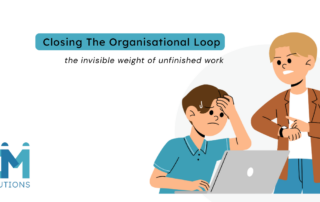
Closing Organisational Loops for a Strong New Year

Every NPO leader knows the invisible weight of unfinished work: lingering proposals, vague project scopes, unanswered donor emails, pending HR issues, or that monitoring system you meant to fix in March. These “open loops” don’t only drain personal energythey slow organisational performance, weaken team focus, and create operational drag across the entire system.

In technical terms, open loops increase cognitive loadreduce execution bandwidth, and create a culture where reactivity replaces intentionality.

December provides a strategic window to reduce this load and enter the new year with sharper operational capacity.

Let’s make this practical with a micro-closeout audit across five areas:

  1. Projects: Identify deliverables that can be closed quickly, and document anything that must roll over.
  2. People: Resolve outstanding feedback conversations, clarify roles for January, and confirm leave schedules to prevent bottlenecks.
  3. Systems: Archive old files, update workflow boards, and clean up your CRM or M&E platform.
  4. Finance: Clear small reconciliations, outstanding supplier issues, unallocated transactions, or donor reporting requirements.
  5. Leadership: Review strategic commitments and decide which to keep, pause, or stop entirely.

What will this micro-closeout audit do for your organisation? It will improve staff collaboration, make decision-making faster, and set you up to respond more effectively to emerging community needs and funding shifts.

Leaders who model closure create teams that execute with clarity. Leaders who drift into the holidays with chaos signal that ambiguity is acceptable.

Take a moment in the pre-holiday madness. Your team will thank you in the new year.

As always, EM Solutions is available to assist you should you need a sounding board or an extra pair of hands. Because we believe in you, and in unlocking NPO potential.

8 December 2025

By |2025-12-17T13:21:53+02:00December 8th, 2025|Financial Management, Leadership|0 Comments

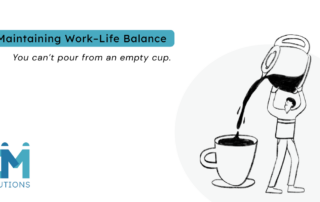
Maintaining Work–Life Balance — Leading Without Losing Yourself

In the world of Not for Profit work, passion and purpose often drive leaders to give endlessly of themselves — sometimes at great personal cost. The needs never stop, and it’s easy to believe that balance is a luxury. Yet without it, even the most dedicated leader risks burnout, cynicism, or compassion fatigue.

Maintaining work–life balance isn’t about doing less; it’s about living sustainably. When leaders protect time for rest, family, and renewal, they bring sharper focus, better decision-making, and deeper empathy to their teams and communities. A balanced leader is a resilient one — able to weather storms and keep perspective when challenges arise.

Let’s get practical with five keys to creating work-life balance

• Set Clear Boundaries: Define when your workday ends — and stick to it. Model this for your team.
• Plan Rest Proactively: Schedule rest and renewal like any other key appointment. Protect holidays and weekends.
• Delegate with Trust: Empower capable staff to lead projects or decisions — it builds their capacity and protects yours.
• Revisit Priorities Weekly: Ask, What truly matters this week? Let go of the non-essential.
• Cultivate Non-Work Joy: Engage in hobbies, exercise, or community activities that restore your energy.

Sustainable leadership is not about constant productivity; it’s about consistent presence. When leaders care for their own wellbeing, they create healthier, more humane organisations — where everyone can thrive.

It’s time to check in. Take a moment to answer these questions:

1. What personal practices help me rest, recharge, and refocus?
2. Where do I need clearer boundaries between work and personal time?

3. How can I model healthy balance for my team, so they feel permission to do the same?

A well-balanced leader is a stronger leader. Protecting your well-being ensures you can keep leading with heart, energy, and clarity for years to come.

What’s one small change you could make this week to improve your balance and wellbeing? Share your ideas in the comments or challenge your team to do the same — together, we can model healthier leadership.

24 November 2025

By |2025-12-17T12:59:31+02:00November 24th, 2025|Financial Management, Leadership|0 Comments

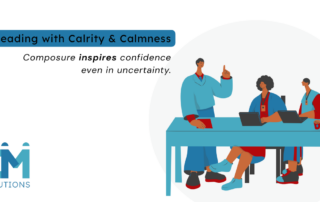
Emotional Regulation — Leading with Calm and Clarity

If self-awareness is about knowing your emotions, emotional regulation is about managing them well — especially under stress. For NPO leaders dealing with staff burnout, funding pressure, and human complexity, this skill is what turns empathy into effective leadership.

Emotionally regulated leaders don’t suppress their feelings — they master them. They pause before reacting, communicate thoughtfully, and set the tone for calm and clarity. Their composure under pressure creates a ripple effect of trust and steadiness throughout the organisation.

Need to take a moment today to bring things back to calm? Here are some practical tools to strengthen your emotional regulation.

• Pause and breathe: Take a few deep breaths before responding to tension or conflict. This short pause can reset your nervous system.
• Mindfulness practices: Simple daily mindfulness or meditation helps you notice emotions early and choose your response.
• Reframing: Shift from “This is impossible” to “This is a challenge I can influence.” The language you use shapes your mindset.
• Boundaries and rest: Emotional regulation depends on recovery — protect time for rest, exercise, and family.

• Professional supervision or counselling: Processing emotions in a safe space helps prevent compassion fatigue and burnout.

By mastering emotional regulation, NPO leaders model grace under pressure and nurture teams that feel secure, valued, and inspired — even in uncertain times.

What about a quick check-in?  Ask yourself:

1. How do I typically respond when I’m under pressure or frustrated?
2. What practices help me return to calm after a difficult day or conversation?

3. How might my emotional tone influence the morale and energy of my team?

Remember, when leaders stay calm, teams stay strong. Emotional regulation doesn’t just protect you — it strengthens the whole organisation.

What’s one practice that helps you stay grounded under pressure? Share your tip in the comments or start a conversation with your leadership team about how to support emotional balance in your workplace.

17 November 2025

By |2025-12-17T13:00:54+02:00November 17th, 2025|Financial Management, Leadership|0 Comments

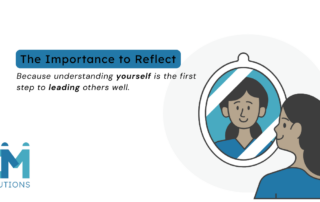
Self-Awareness — The Starting Point of Strong Leadership

In the fast-paced, emotionally charged environment of a Not for Profit organisation, self-awareness is a leader’s anchor. It’s the ability to understand your emotions, motivations, and reactions — and to recognise how these impact others. Without it, even the most capable leader can unintentionally create confusion or mistrust.

Self-aware leaders notice their emotional triggers and patterns. They can pause before reacting, ask better questions, and adapt their approach to the moment. This reflection leads to wiser decisions, deeper empathy, and more authentic relationships across staff, volunteers, and stakeholders.

Practical Tools to Build Self-Awareness

• 360° Feedback: Ask trusted colleagues for honest reflections on how you lead and communicate.
• Reflective Practice: Take 10 minutes at the end of each day to ask, What went well? What challenged me? How did I show up for others?
• Coaching or Mentorship: A supportive partner can help uncover blind spots and build new habits.

• Personality or Values Assessments: Explore tools like the Enneagram, StrengthsFinder, or VIA Character Strengths for insight.

Here are some reflection questions you may find helpful:

1. When was the last time I paused to consider how my emotions affected a team interaction?
2. What feedback have I received recently that surprised me — and what might it be teaching me?

3. Which situations bring out my best leadership — and which test my patience or confidence?

Self-awareness is not about perfection — it’s about presence. The more a leader understands themselves, the more effectively they can lead with empathy, confidence, and consistency.

What’s one insight you’ve gained from reflecting on your leadership style? Share your thoughts in the comments or tag us in your post — we’d love to hear from you.

7 November 2025

By |2025-12-17T13:02:47+02:00November 11th, 2025|Financial Management, Leadership|0 Comments

Future-proofing your NPO

Many NPOs are so lean that the loss of one staff member can cause major disruption. Future-proofing means putting structures in place so that institutional knowledge, skills, and relationships don’t sit with only one person.

Focus on these three key strategies to ensure that if you lose that one person, you don’t lose all your organisational knowledge at the same time.

1. Knowledge Management:  Start a documentation culture. Ensure all processes, contacts, and workflows are written down and stored in a shared system (Google Drive, Notion, SharePoint, etc.). Each staff member should maintain a “living” handover document outlining key tasks, deadlines, passwords (stored securely), and partner relationships. Avoid having “one-person files”—make sure multiple people can access critical documents.

2. Cross-Training & Skill Sharing:  Encourage staff to learn each other’s roles, even if at a basic level. Let staff rotate responsibilities occasionally (e.g., who takes minutes, who handles reporting). Identify backups for each critical function.

3. Leadership & Succession Planning:  Identify potential leaders, those who can step up if needed. For senior roles, outline a clear succession plan approved by the board. Get your board involved, and make sure board members understand operational essentials and can provide short-term cover if required.

Putting together these three key strategies will take some time. If you need a hand or some fresh perspective, our experienced EM Solutions team is on stand-by to assist. Future-proofing is essential in times like these.

8 October 2025

By |2025-12-17T13:03:57+02:00October 8th, 2025|Financial Management, Leadership|0 Comments

What’s Your Backup Plan?

We’re talking about resilience in October. In my last blog, I mentioned that our family has a grab-and-go folder with all our important info in it. However, does your NPO have a grab-and-go folder for its important data in case a disaster hits?

Data loss from a fire (or any disaster) can be catastrophic, especially for a nonprofit organisation that may rely heavily on irreplaceable donor, grant, program, and financial records.

Here’s a comprehensive list of best practice measures you should have in place to protect your data in the event of a disaster like a fire:

  1. Store all essential data in the cloud with a reputable provider (Google Workspace, Microsoft 365, Dropbox Business or Box). If you set up automatic syncing and version history, you’ll keep older copies safe. This keeps your data off-site and safe, even if your office and computer are destroyed.
  2. Follow the 3-2-1 backup rule – 3 copies of your data, 2 different formats (cloud + external hard drive), 1 copy off-site (in the cloud or outside your office)
  3. Create a disaster recovery plan – how you will recover data, staff roles in disaster response, a communication plan with your stakeholders, contact info for IT support, vendors, insurance, etc.
  4. Keep an updated list of all hardware (computers, servers, drives), software and digital platforms, what data is stored where and who owns it
  5. Be cybersecurity aware – use multi-factor authentication (everywhere), password managers and strong passwords. Update your software regularly and make sure your anti-virus is up to date.
  6. Train your staff about phishing and data awareness, and make sure people can only access what they need. If someone leaves, revoke their access immediately.
  7. Check your insurance covers data recovery charges.

Last, but not least, run a disaster simulation to see just how prepared you really are should things go wrong.

If you need a hand, reach out. Our EM Solutions team can help you run an audit and make sure that your organisation is data-safe at all times.

7 October 2025

By |2025-12-17T13:04:48+02:00October 7th, 2025|Financial Management|0 Comments

Leadership in NPO Retrenchments: Balancing Compassion and Clarity

Few challenges test leadership in non-profit organisations as deeply as retrenchments. Unlike the corporate world, where financial logic often dominates, NPOs must weigh financial survival against their mission and the human impact on dedicated staff. In these moments, leadership is revealed not just in decisions made, but in how they are carried out.

Strong leadership during retrenchment begins with transparency. Teams need to understand why retrenchment is necessary and how decisions are being made. Leaders who communicate openly, explain the financial and strategic realities, and invite questions demonstrate integrity and respect. Avoiding or delaying these conversations erodes trust and fuels rumours.

Equally important is empathy. Staff in NPOs often view their work as more than a job; it is a calling. Leaders who acknowledge this emotional weight—listening, showing compassion, and offering support—help preserve dignity even in loss. A weakness here is detachment: treating retrenchment as purely transactional can damage morale and tarnish the organisation’s culture long after the process ends.

Decisiveness is another essential strength. Prolonged uncertainty undermines stability. Leaders must act with clarity and timeliness, while also ensuring decisions are fair and consistent with the organisation’s values. Weakness emerges when leaders waver, shift explanations, or appear to protect some at the expense of others.

Ultimately, retrenchment in an NPO is a test of values. Leaders who balance compassion with clarity, honesty with hope, and decisiveness with fairness can maintain trust and keep the organisation steady—even while navigating painful change.

Is your NPO facing possible retrenchments? EM Solutions offers strategic insight and independent external mentors with years of experience in NPO management, finance and HR, ready to help you navigate change with confidence and decisiveness. You don’t have to do the hard work alone.

29 September 2025

By |2025-12-17T13:06:06+02:00September 29th, 2025|Financial Management, Leadership|0 Comments