
Closing Organisational Loops for a Strong New Year

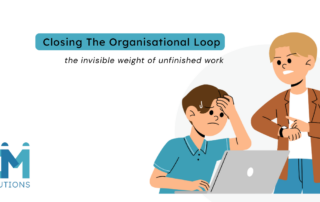
Every NPO leader knows the invisible weight of unfinished work: lingering proposals, vague project scopes, unanswered donor emails, pending HR issues, or that monitoring system you meant to fix in March. These “open loops” don’t only drain personal energythey slow organisational performance, weaken team focus, and create operational drag across the entire system.

In technical terms, open loops increase cognitive loadreduce execution bandwidth, and create a culture where reactivity replaces intentionality.

December provides a strategic window to reduce this load and enter the new year with sharper operational capacity.

Let’s make this practical with a micro-closeout audit across five areas:

  1. Projects: Identify deliverables that can be closed quickly, and document anything that must roll over.
  2. People: Resolve outstanding feedback conversations, clarify roles for January, and confirm leave schedules to prevent bottlenecks.
  3. Systems: Archive old files, update workflow boards, and clean up your CRM or M&E platform.
  4. Finance: Clear small reconciliations, outstanding supplier issues, unallocated transactions, or donor reporting requirements.
  5. Leadership: Review strategic commitments and decide which to keep, pause, or stop entirely.

What will this micro-closeout audit do for your organisation? It will improve staff collaboration, make decision-making faster, and set you up to respond more effectively to emerging community needs and funding shifts.

Leaders who model closure create teams that execute with clarity. Leaders who drift into the holidays with chaos signal that ambiguity is acceptable.

Take a moment in the pre-holiday madness. Your team will thank you in the new year.

As always, EM Solutions is available to assist you should you need a sounding board or an extra pair of hands. Because we believe in you, and in unlocking NPO potential.

8 December 2025

By |2025-12-17T13:21:53+02:00December 8th, 2025|Financial Management, Leadership|0 Comments

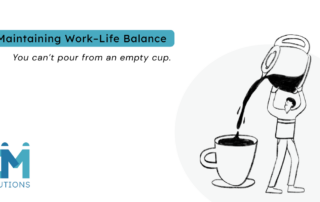
Maintaining Work–Life Balance — Leading Without Losing Yourself

In the world of Not for Profit work, passion and purpose often drive leaders to give endlessly of themselves — sometimes at great personal cost. The needs never stop, and it’s easy to believe that balance is a luxury. Yet without it, even the most dedicated leader risks burnout, cynicism, or compassion fatigue.

Maintaining work–life balance isn’t about doing less; it’s about living sustainably. When leaders protect time for rest, family, and renewal, they bring sharper focus, better decision-making, and deeper empathy to their teams and communities. A balanced leader is a resilient one — able to weather storms and keep perspective when challenges arise.

Let’s get practical with five keys to creating work-life balance

• Set Clear Boundaries: Define when your workday ends — and stick to it. Model this for your team.
• Plan Rest Proactively: Schedule rest and renewal like any other key appointment. Protect holidays and weekends.
• Delegate with Trust: Empower capable staff to lead projects or decisions — it builds their capacity and protects yours.
• Revisit Priorities Weekly: Ask, What truly matters this week? Let go of the non-essential.
• Cultivate Non-Work Joy: Engage in hobbies, exercise, or community activities that restore your energy.

Sustainable leadership is not about constant productivity; it’s about consistent presence. When leaders care for their own wellbeing, they create healthier, more humane organisations — where everyone can thrive.

It’s time to check in. Take a moment to answer these questions:

1. What personal practices help me rest, recharge, and refocus?
2. Where do I need clearer boundaries between work and personal time?

3. How can I model healthy balance for my team, so they feel permission to do the same?

A well-balanced leader is a stronger leader. Protecting your well-being ensures you can keep leading with heart, energy, and clarity for years to come.

What’s one small change you could make this week to improve your balance and wellbeing? Share your ideas in the comments or challenge your team to do the same — together, we can model healthier leadership.

24 November 2025

By |2025-12-17T12:59:31+02:00November 24th, 2025|Financial Management, Leadership|0 Comments

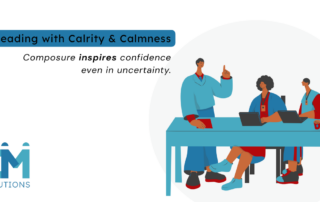
Emotional Regulation — Leading with Calm and Clarity

If self-awareness is about knowing your emotions, emotional regulation is about managing them well — especially under stress. For NPO leaders dealing with staff burnout, funding pressure, and human complexity, this skill is what turns empathy into effective leadership.

Emotionally regulated leaders don’t suppress their feelings — they master them. They pause before reacting, communicate thoughtfully, and set the tone for calm and clarity. Their composure under pressure creates a ripple effect of trust and steadiness throughout the organisation.

Need to take a moment today to bring things back to calm? Here are some practical tools to strengthen your emotional regulation.

• Pause and breathe: Take a few deep breaths before responding to tension or conflict. This short pause can reset your nervous system.
• Mindfulness practices: Simple daily mindfulness or meditation helps you notice emotions early and choose your response.
• Reframing: Shift from “This is impossible” to “This is a challenge I can influence.” The language you use shapes your mindset.
• Boundaries and rest: Emotional regulation depends on recovery — protect time for rest, exercise, and family.

• Professional supervision or counselling: Processing emotions in a safe space helps prevent compassion fatigue and burnout.

By mastering emotional regulation, NPO leaders model grace under pressure and nurture teams that feel secure, valued, and inspired — even in uncertain times.

What about a quick check-in?  Ask yourself:

1. How do I typically respond when I’m under pressure or frustrated?
2. What practices help me return to calm after a difficult day or conversation?

3. How might my emotional tone influence the morale and energy of my team?

Remember, when leaders stay calm, teams stay strong. Emotional regulation doesn’t just protect you — it strengthens the whole organisation.

What’s one practice that helps you stay grounded under pressure? Share your tip in the comments or start a conversation with your leadership team about how to support emotional balance in your workplace.

17 November 2025

By |2025-12-17T13:00:54+02:00November 17th, 2025|Financial Management, Leadership|0 Comments

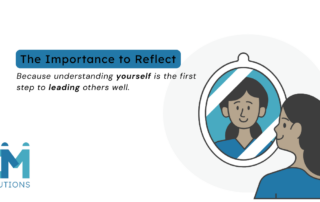
Self-Awareness — The Starting Point of Strong Leadership

In the fast-paced, emotionally charged environment of a Not for Profit organisation, self-awareness is a leader’s anchor. It’s the ability to understand your emotions, motivations, and reactions — and to recognise how these impact others. Without it, even the most capable leader can unintentionally create confusion or mistrust.

Self-aware leaders notice their emotional triggers and patterns. They can pause before reacting, ask better questions, and adapt their approach to the moment. This reflection leads to wiser decisions, deeper empathy, and more authentic relationships across staff, volunteers, and stakeholders.

Practical Tools to Build Self-Awareness

• 360° Feedback: Ask trusted colleagues for honest reflections on how you lead and communicate.
• Reflective Practice: Take 10 minutes at the end of each day to ask, What went well? What challenged me? How did I show up for others?
• Coaching or Mentorship: A supportive partner can help uncover blind spots and build new habits.

• Personality or Values Assessments: Explore tools like the Enneagram, StrengthsFinder, or VIA Character Strengths for insight.

Here are some reflection questions you may find helpful:

1. When was the last time I paused to consider how my emotions affected a team interaction?
2. What feedback have I received recently that surprised me — and what might it be teaching me?

3. Which situations bring out my best leadership — and which test my patience or confidence?

Self-awareness is not about perfection — it’s about presence. The more a leader understands themselves, the more effectively they can lead with empathy, confidence, and consistency.

What’s one insight you’ve gained from reflecting on your leadership style? Share your thoughts in the comments or tag us in your post — we’d love to hear from you.

7 November 2025

By |2025-12-17T13:02:47+02:00November 11th, 2025|Financial Management, Leadership|0 Comments

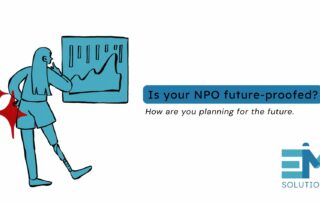
Future-proofing your NPO

Many NPOs are so lean that the loss of one staff member can cause major disruption. Future-proofing means putting structures in place so that institutional knowledge, skills, and relationships don’t sit with only one person.

Focus on these three key strategies to ensure that if you lose that one person, you don’t lose all your organisational knowledge at the same time.

1. Knowledge Management:  Start a documentation culture. Ensure all processes, contacts, and workflows are written down and stored in a shared system (Google Drive, Notion, SharePoint, etc.). Each staff member should maintain a “living” handover document outlining key tasks, deadlines, passwords (stored securely), and partner relationships. Avoid having “one-person files”—make sure multiple people can access critical documents.

2. Cross-Training & Skill Sharing:  Encourage staff to learn each other’s roles, even if at a basic level. Let staff rotate responsibilities occasionally (e.g., who takes minutes, who handles reporting). Identify backups for each critical function.

3. Leadership & Succession Planning:  Identify potential leaders, those who can step up if needed. For senior roles, outline a clear succession plan approved by the board. Get your board involved, and make sure board members understand operational essentials and can provide short-term cover if required.

Putting together these three key strategies will take some time. If you need a hand or some fresh perspective, our experienced EM Solutions team is on stand-by to assist. Future-proofing is essential in times like these.

8 October 2025

By |2025-12-17T13:03:57+02:00October 8th, 2025|Financial Management, Leadership|0 Comments

Leadership in NPO Retrenchments: Balancing Compassion and Clarity

Few challenges test leadership in non-profit organisations as deeply as retrenchments. Unlike the corporate world, where financial logic often dominates, NPOs must weigh financial survival against their mission and the human impact on dedicated staff. In these moments, leadership is revealed not just in decisions made, but in how they are carried out.

Strong leadership during retrenchment begins with transparency. Teams need to understand why retrenchment is necessary and how decisions are being made. Leaders who communicate openly, explain the financial and strategic realities, and invite questions demonstrate integrity and respect. Avoiding or delaying these conversations erodes trust and fuels rumours.

Equally important is empathy. Staff in NPOs often view their work as more than a job; it is a calling. Leaders who acknowledge this emotional weight—listening, showing compassion, and offering support—help preserve dignity even in loss. A weakness here is detachment: treating retrenchment as purely transactional can damage morale and tarnish the organisation’s culture long after the process ends.

Decisiveness is another essential strength. Prolonged uncertainty undermines stability. Leaders must act with clarity and timeliness, while also ensuring decisions are fair and consistent with the organisation’s values. Weakness emerges when leaders waver, shift explanations, or appear to protect some at the expense of others.

Ultimately, retrenchment in an NPO is a test of values. Leaders who balance compassion with clarity, honesty with hope, and decisiveness with fairness can maintain trust and keep the organisation steady—even while navigating painful change.

Is your NPO facing possible retrenchments? EM Solutions offers strategic insight and independent external mentors with years of experience in NPO management, finance and HR, ready to help you navigate change with confidence and decisiveness. You don’t have to do the hard work alone.

29 September 2025

By |2025-12-17T13:06:06+02:00September 29th, 2025|Financial Management, Leadership|0 Comments

The Hard Role of Leadership in NPOs

Leadership in non-profit organisations (NPOs) is not for the faint-hearted. Unlike businesses that can pivot strategies based on profit margins, NPOs are deeply tied to their missions, communities, and often, to “the way things have always been done.” When it comes to staffing, program delivery, and navigating long-standing traditions, leaders face a complex and often emotionally charged balancing act.

In times of change, the best NPO leaders share several characteristics:

• Vision – the ability to see beyond immediate pressures and articulate a clear direction.
• Resilience – staying steady and hopeful in the face of setbacks.
• Adaptability – responding quickly to new realities without losing sight of the mission.
• Empathy – understanding the human impact of difficult decisions.
• Integrity – ensuring that every choice is rooted in the organisation’s values.

For many NPOs, staffing challenges are ongoing. Resources are limited, workloads are high, and salaries are often less competitive than in the private sector. Leaders must motivate and retain staff while also pushing for accountability and innovation. This requires transparency, empathy, and a willingness to listen. The best leaders recognize that people are their most valuable resource. They invest in professional development, encourage initiative, and create environments where staff feel valued—even when budgets are tight.

Programs are the heart of an NPO’s impact, but they can’t remain static in a changing world. Communities’ needs evolve, funding priorities shift, and external crises—such as pandemics, wars, or climate events—demand adaptation. Strong leaders know when to protect core programs and when to reimagine or sunset initiatives that no longer serve their mission. This requires courage, clear communication, and the ability to align program changes with both community needs and donor expectations.

Perhaps the hardest challenge is managing “the way things have always been.” NPOs often carry deep legacies, and traditions can become sacred. While history and culture must be honoured, clinging too tightly to outdated practices can limit growth and relevance. Effective leaders respect the past but do not allow it to dictate the future. They frame change as an evolution rather than a rupture, and they bring people along by building trust and inviting participation in shaping what comes next.

Leading in an NPO is often described as steering a ship through rough seas with limited fuel. Yet it is precisely in these difficult moments that strong, thoughtful leadership ensures not only survival but also the possibility of renewed relevance and impact.

In times like these, it’s helpful to have experienced colleagues who can navigate the journey with you. That’s where EM Solutions can assist – our team of experienced NPO practitioners are standing by to provide a sounding board, offer financial acumen and practical solutions. You don’t have to do the hard work alone.

21 September 2025

By |2025-12-17T13:08:32+02:00September 21st, 2025|Financial Management, Leadership|0 Comments

The Power of Decisive Leadership

Non-profit organisations often operate in a landscape of uncertainty—funding shifts, evolving community needs, and external crises can unsettle even the most stable teams. In these moments, leadership is tested not just by what decisions are made, but by how they are made. One of the strongest ways to build trust within a team is through decisiveness.

Decisiveness does not mean rushing into action without consultation or reflection. Rather, it is about gathering the best available information, listening to diverse perspectives, and then moving forward with clarity and confidence. In times of uncertainty, teams can become anxious or demoralised if leaders hesitate too long, revisit the same issues repeatedly, or avoid making hard calls. Decisive leaders provide direction, which in turn creates stability.

For NPOs, this is particularly critical. Staff and volunteers are deeply committed to mission-driven work, but when programmes are at risk, funding is uncertain, or roles are shifting, their sense of security can waver. A decisive leader reassures the team that—even if the path ahead is difficult—there is a plan and a steady hand guiding the organisation.

Being decisive also models accountability. When leaders are clear about why a choice has been made, they demonstrate transparency and integrity. This builds trust because staff understand that decisions are rooted in values and evidence, not personal preference or avoidance.

Finally, decisiveness invites momentum. A team that sees progress, even through incremental steps, regains confidence and energy. While not every decision will be perfect, consistent and decisive action communicates respect for people’s time, effort, and commitment.

Trust is one of an NPO’s greatest assets. By leading decisively, leaders cultivate that trust—anchoring their teams and enabling them to face change together with resilience and purpose.

Would you like to be mentored in your leadership?  EM Solutions offers coaching and mentoring to help you lead with confidence and decisiveness. Our team of experienced NPO practitioners are standing by to provide a sounding board, offer financial acumen and practical solutions. You don’t have to do the hard work alone.

11 September 2025

By |2025-12-17T13:10:10+02:00September 11th, 2025|Financial Management, Leadership|0 Comments

How Do You Score out of 12?

Developing a principle-based business is easier on paper than it is in practice. Each and everyday business leaders will be challenged to push the boundaries on their principles, both personal and business. For some, this is not an issue, but for those of us who have clear and firm boundaries on how we wish to run things, it is a constant challenge.

In a recent workshop, we were challenged with 12 principles for a Godly business that seemed to fall in line with our own vision and mission statements, but when we began to scratch a little there was definitely some uncomfortable shifting in seat amongst all those present. Here they are in summary: How do you measure up to these in your business?

1.       Whatever you do in word or deed, do it for God

2.       Do all things without complaining and disputing

3.       Be humble

4.       Watch what you say

5.       Keep learning

6.       Guard your integrity

7.       Work hard

8.       Seek good counsel

9.       Honour God with your wealth

10.   Show mercy and be gracious

11.   Control your anger

12.   Don’t fear people

There were a number of additions to this list once we began to discuss our own lives and businesses, but these are a good start to help define an initial culture of authentic business practices.

By |2018-08-14T12:02:38+02:00August 14th, 2018|Leadership|0 Comments

Recruiting the right people for the right job

Getting the right person with the right skill, enthusiasm, expertise and confidence for the post within your business is as rare as winning the Lotto. Or is it?

What can be done to better recruit the right staff members within your business? There are a number of key strategies that can be followed to help eliminate the errors of recruitment that will help get closer to the right person.

The number one error we see in small business is what I call ‘Sympathy employment’. This happens when we are requested or even forced into employing someone from our own family, church or friend circle just because of their relationship with you. This request often comes from your mother or someone else you find it hard to say No to. You employ this person and from day one they become a slacker and high maintenance. These people are hard to train, discipline or get rid of. If you have in the past or are planning to employ someone like this: DO NOT.

Another issue we see in small businesses is that staff are either recruited far too early for the post or too late. Both these result in a huge trough of productivity for the new staff member who is either board or over-worked. Staff should be employed at the right time, just as the workload is increasing allowing just enough time for Induction, training and orientation into the business. Timing is everything

Developing a solid business case and job description for new posts is key. Too often we think we know what we need and then once we are stuck with a staff member, we try to bend our business around their skills and needs. This compromise will always begin to derail your business and your long term strategies.

Getting professional help is a must for more skilled posts. I know that recruitment agencies are expensive and they don’t seem to ‘earn’ their money, but their experience and insight into the process of recruitment will be invaluable in the long term. Get help from the right people.

Do not recruit off GumTree or CraigList or any other free web based advertising platform. You will get all the people you do not want or need. We put up an advert for an admin post earlier this year and got over 300 applications. Most of them with spelling errors and completely inadequate skill sets.

Then once you have employed someone you need to put them on an induction programme: more on this in the next post.

By |2017-03-06T13:58:52+02:00March 6th, 2017|Business Resources, Leadership|0 Comments