

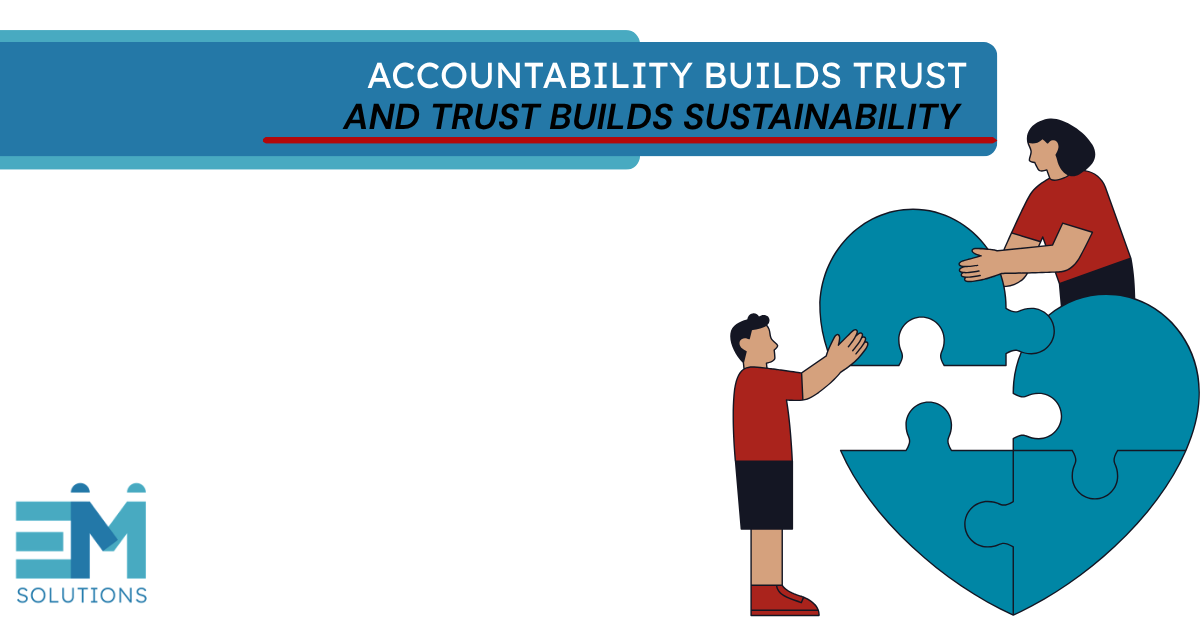
Sustainability depends on something that cannot easily be measured on a spreadsheet: trust.
An NPO needs the trust of its community, funders, staff, board, partners and supporters. That trust is built through accountability.
For an NPO, accountability means being able to answer these questions honestly:
Transparency doesn’t mean pretending everything went perfectly.
In fact, sustainable organisations are often willing to talk honestly about what didn’t work.
Book Dash provides a strong South African example of this principle. The organisation publishes annual reports and audited financial statements and provides public information about its finances and compliance. This level of transparency helps stakeholders understand not only what an organisation does, but how responsibly it operates.
Accountability should also extend to communities.
Don’t only report to communities. Create opportunities for communities to provide feedback to you.
Simple mechanisms can include surveys, community meetings, suggestion boxes, WhatsApp feedback, advisory groups or regular conversations with participants.
Sustainability grows when people know they can trust your organisation.
Try this
Ask: If someone who funds or participates in our organisation wanted to understand exactly what we do and what difference we make, could they?
If not, improve your communication before you improve your fundraising.